Windows into a Wider Reality
by Andy Morgan | October 6, 2026
More than a series of fascinating paintings, the modern mandalas of the late artist Benjamin Creme are teaching tools that convey what words cannot.
Nestled in the Sawtelle district of Los Angeles, along an average street with restaurants and various other businesses, sits an esoteric museum holding over 30 paintings of significant cultural value. For visitors traveling long distances to reach this destination, and for those lucky passers-by who decide to take a peek, a treasure of beautiful artwork awaits, especially for anyone searching for meaning. Here, at the Benjamin Creme Museum, you will find a markedly different form of abstract art, capable of pleasing the eye while also stirring the inner senses.
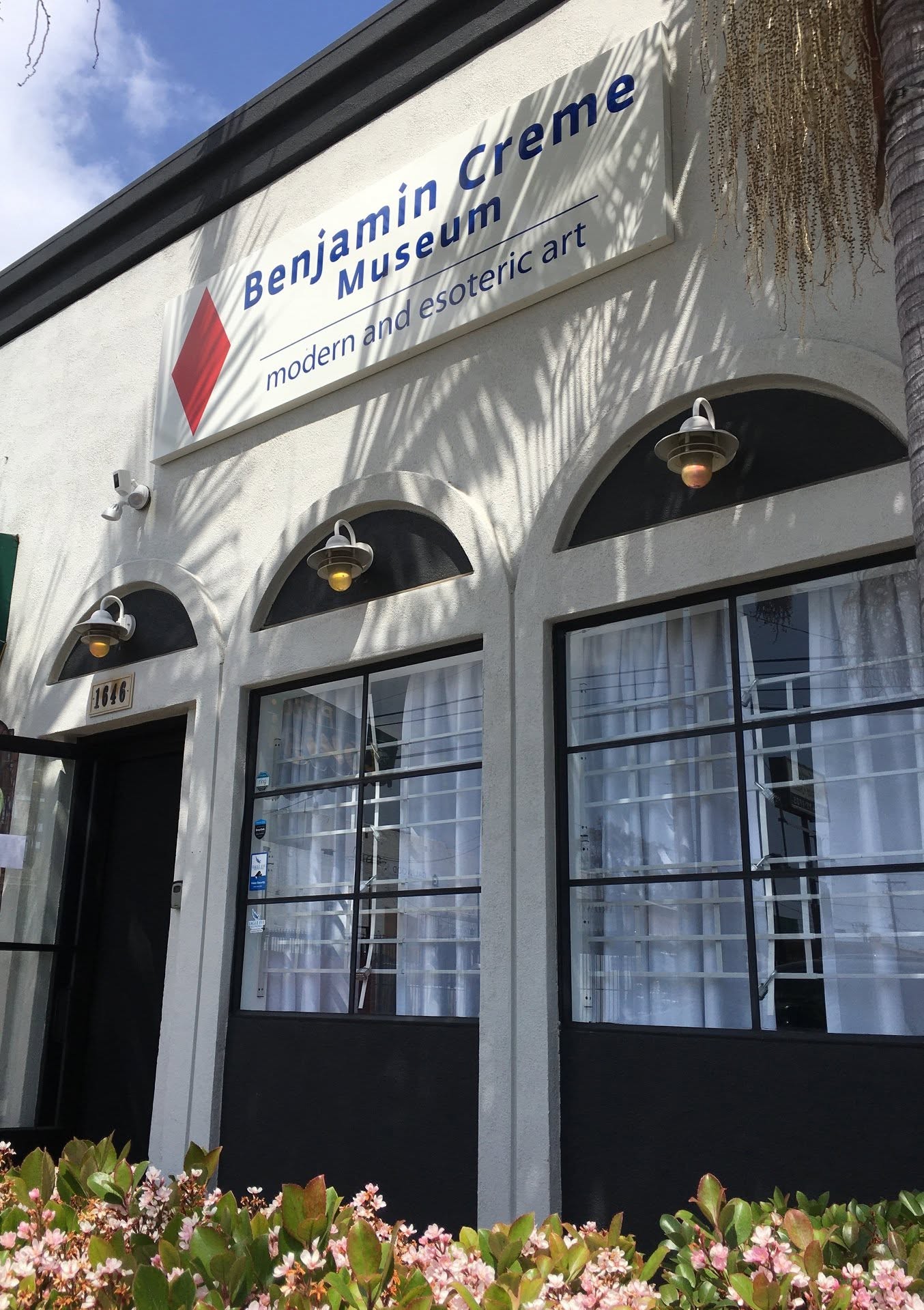
An ambassador of sorts for divine teachers
For those unfamiliar with the British painter Benjamin Creme, what follows is a very brief introduction to a man whose life’s work and related stories could fill volumes. Originally from Scotland, born in 1922, Creme drew inspiration from Picasso, Paul Klee and his own mentor, Jankel Adler. His paintings have been shown at the Victoria and Albert Museum, the British Museum, and the Hunterian Art Gallery, Glasgow. Sibylline Figure (1943) is held in the collection of the Scottish National Gallery of Modern Art.
Besides being a highly accomplished artist in his own right, Creme wrote more than a dozen books. He also regularly travelled around the world for over 35 years offering a message of hope, pointing to a spiritual awakening of humanity. What lies ahead is a peaceful and harmonious era, as he saw it, which will naturally come about when nations apply the principle of sharing to our international economic relations. While some people might have called that fanciful utopian thinking, what gave his message extra weight was his announcement of a profoundly important event taking place on Earth.
Carrying the torch lit by earlier messengers of esoteric philosophy such as Helena P. Blavatsky and Alice A. Bailey, Creme expounded on the Ageless Wisdom Teaching, which underlies all the great scientific, religious, social, political and cultural achievements of mankind. This living body of wisdom foretells an inevitable transformation in society as our collective sense of purpose and connection to the Cosmos expand. Humanity will come to see—as millions of people have already heard or read in Creme’s books, interviews and lectures—that extraordinarily wise spiritual teachers live and walk among us. The Masters of Wisdom, as they are often called, are advanced souls who have gone far ahead of average humanity along the journey of conscious unfoldment. These Adepts have been gradually emerging into public view since 1975. Having reached a relative point of perfection and unconditional love for all life around them, they seek not to impose their ideas but to advise and inspire people in all corners of the globe. Together, in group formation, they will work with world leaders and humanitarian organizers to help us rebuild our institutions along more compassionate lines.
At the head of this group of divine mentors is Maitreya, the Teacher for the new age, who is expected under many names by all the great religious traditions. Creme gave hundreds of interviews and public lectures about the nature and priorities of Maitreya, whom Christians await as the Christ and who works to transform human affairs behind the scenes until he can openly reveal himself to all.
Creme never accepted money for his arduous work as an ambassador, you might say, for these advanced teachers who cannot enter our daily lives without due preparation and a widespread readiness to listen to their ideas. Though an artist by profession, Creme lived modestly and was regarded by all who knew him as a man of the utmost integrity. To say his life was one of continual service to the world is an understatement.
Modern mandalas
Creme’s spiritual insights were closely connected to his oeuvre that blends numerous sacred concepts in a captivating manner. Much of his art is esoteric in nature in that it centers on the evolution of consciousness, whether it be on a cosmic, planetary, kingdom or personal level. His mandala pieces, produced during the latter phase of his artistic evolution, express a spiritual reality underlying the outer phenomenal world. Mandalas can release in the viewer certain types of energy and are therefore helpful meditation tools. These mandalas in particular will eventually serve as an indispensable visual aid for those who investigate the Ageless Wisdom through a multitude of texts and sources, from ancient past to recent times. Whether it be the Hindu Vedas, the Theosophical Society writings from 150 years ago, or Creme’s more recent revelations of the Masters’ presence among us and insights into the Divine Plan ever unfolding, much still remains to be ascertained by humanity.
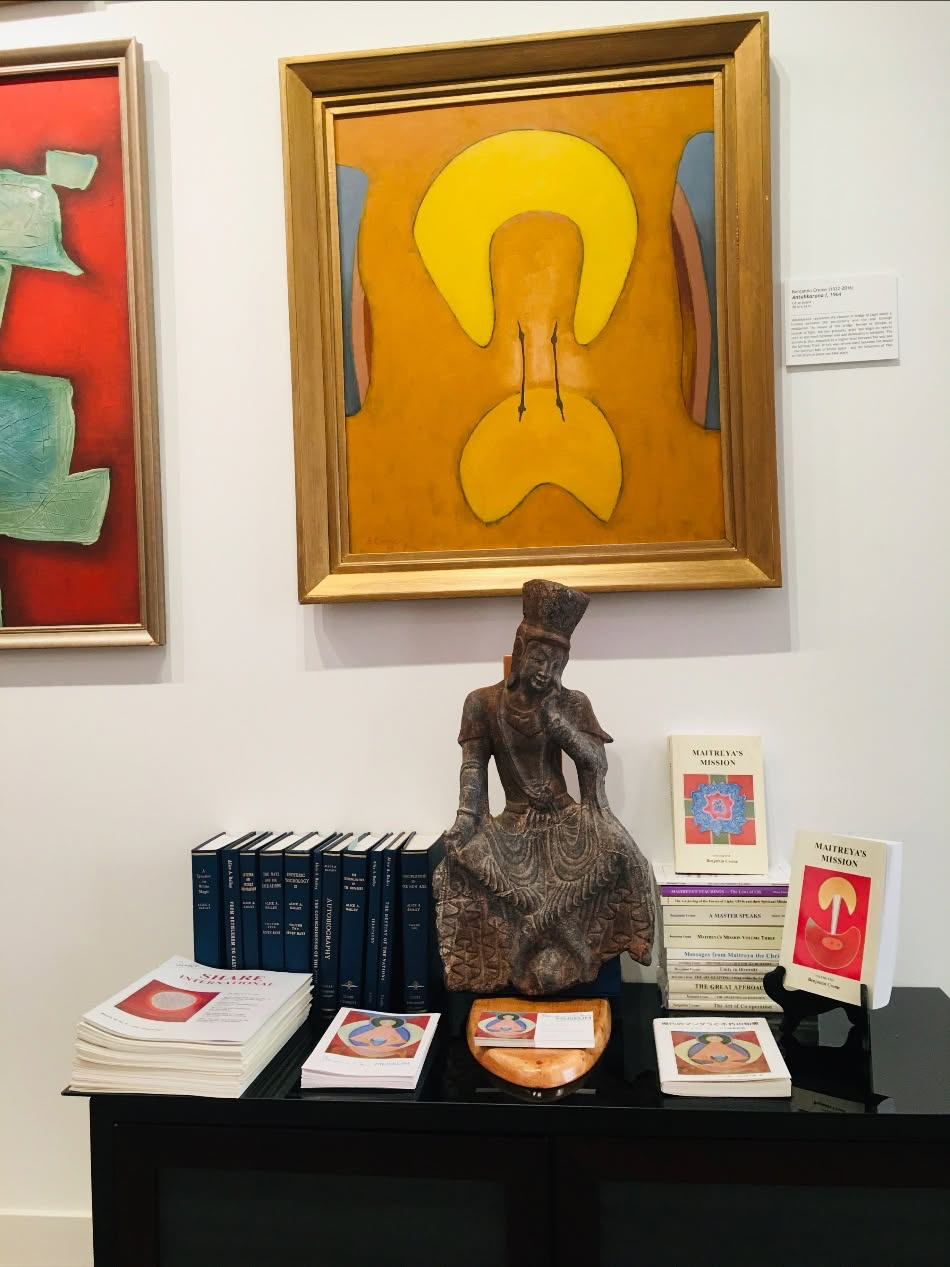
Let us explore the meaning behind one of these mandalas: Antahkarana 1 (above photo) symbolizes a bridge of light, among other things. When completely established, this bridge links the physical brain with our super-personal aspect, the soul. This is an unconscious building process spanning numerous lifetimes along the spiritual path that eventually leads to full self-realization. The alignment with one’s soul—and eventually with the highest divine aspect, the Monad or Spark of God—allows one to enter more deeply into the mysteries of life while also serving humanity in an ever-greater capacity.
My experience
In January 2023 I visited the Benjamin Creme Museum and saw his work for the first time in person. While I have been fortunate enough to visit some of the world’s great museums, this collection has a feel all its own. These powerful, intriguing masterpieces do not fit into any normal category for me. They represent ideas that challenge the lower mind and really call forth the higher mind. Their unusual combinations of colors, ethereal shapes and plentiful symbols suggest multiple layers of meaning that require time to sink in.
Toward the entrance you will find some of his earlier landscape abstracts and figures that carry a special signature of tenderness overlaid with formality. Then, as you move on to the remaining walls, the style changes completely. You have surely never seen anything on canvas quite like what’s in front of you. As I was told by Scott Champion, one of the Museum’s volunteers, both the earlier abstracts and the esoteric pieces have delighted many people who enter without having background knowledge of Creme’s profile as a professional artist, his connection to the Spiritual Hierarchy, and his many other invaluable contributions to humanity. This helped me to further appreciate the importance and role of art in general, but especially when it comes to what is contained in those rooms. Visitors need not be well versed in esoteric literature to fully experience and appreciate such energetic masterpieces in all their magnificence.
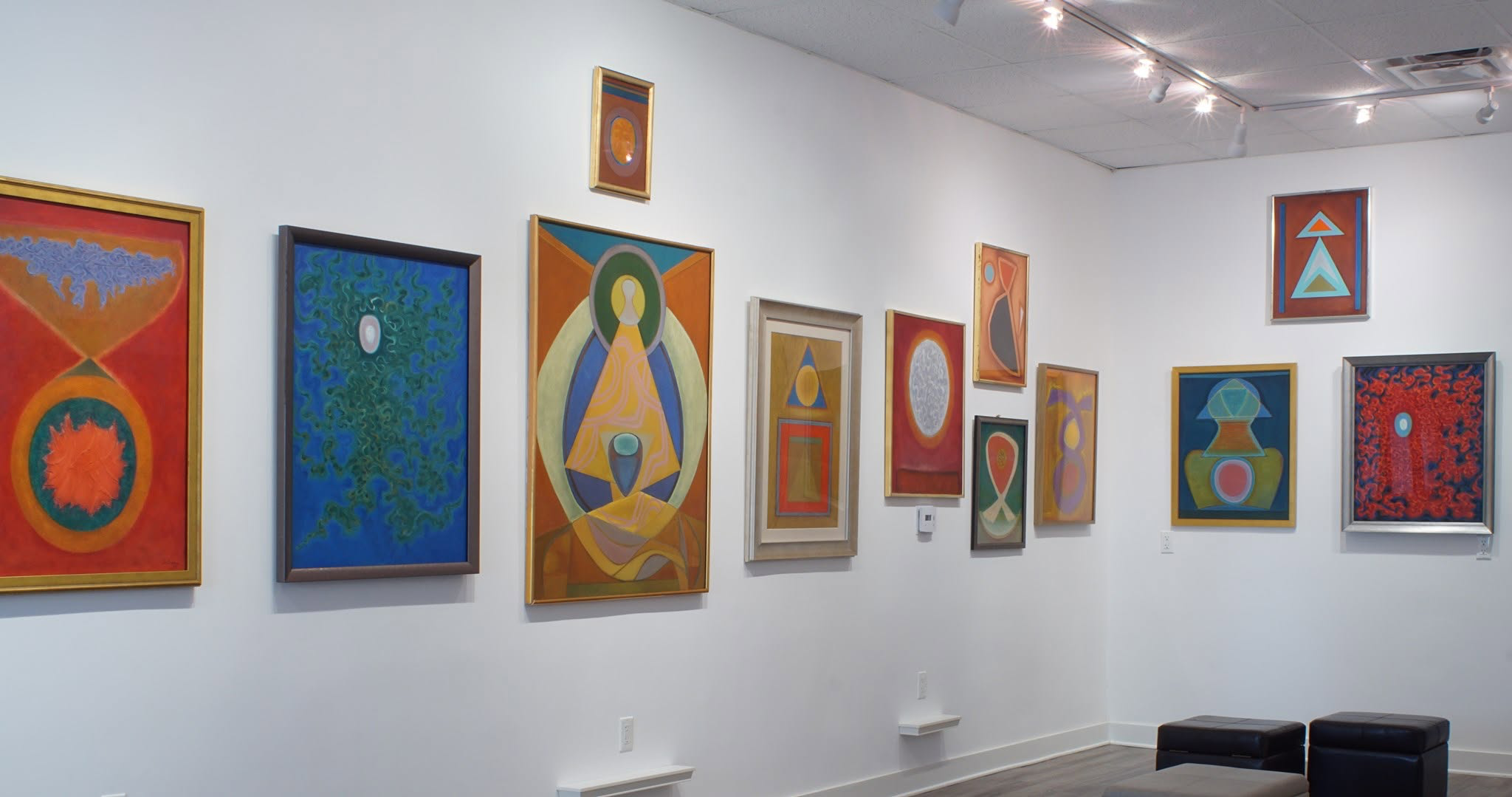
While standing in front of Vision, a striking scene of a fiery, egg-shaped cosmic symbol hovering over an altar-like platform, I marveled at how a painting can carry you outside of time altogether. Creme was inspired to create it by Van Gogh’s musings on the art of the future in his letters to his brother Theo. It reminds me of another painting not in the museum, New World, which depicts a fiery planet at an early stage of development. It is as though Creme could peer eons into the past or future, capturing cosmogonical processes as if he had witnessed them himself. These images feel both alive and instructive. Photographs of Vision and other works only hint at their effect. If you ever get the chance, see them in person. These pieces are really windows, I would say. They are windows into a wider reality—with all its hidden forces, laws and entities—to which we are all connected, knowingly or not.
- Benjamin Creme Museum
- National Galleries of Scotland
- England & Co Gallery
